The Shoebox On My Porch That Ended Twelve Years Of Silence
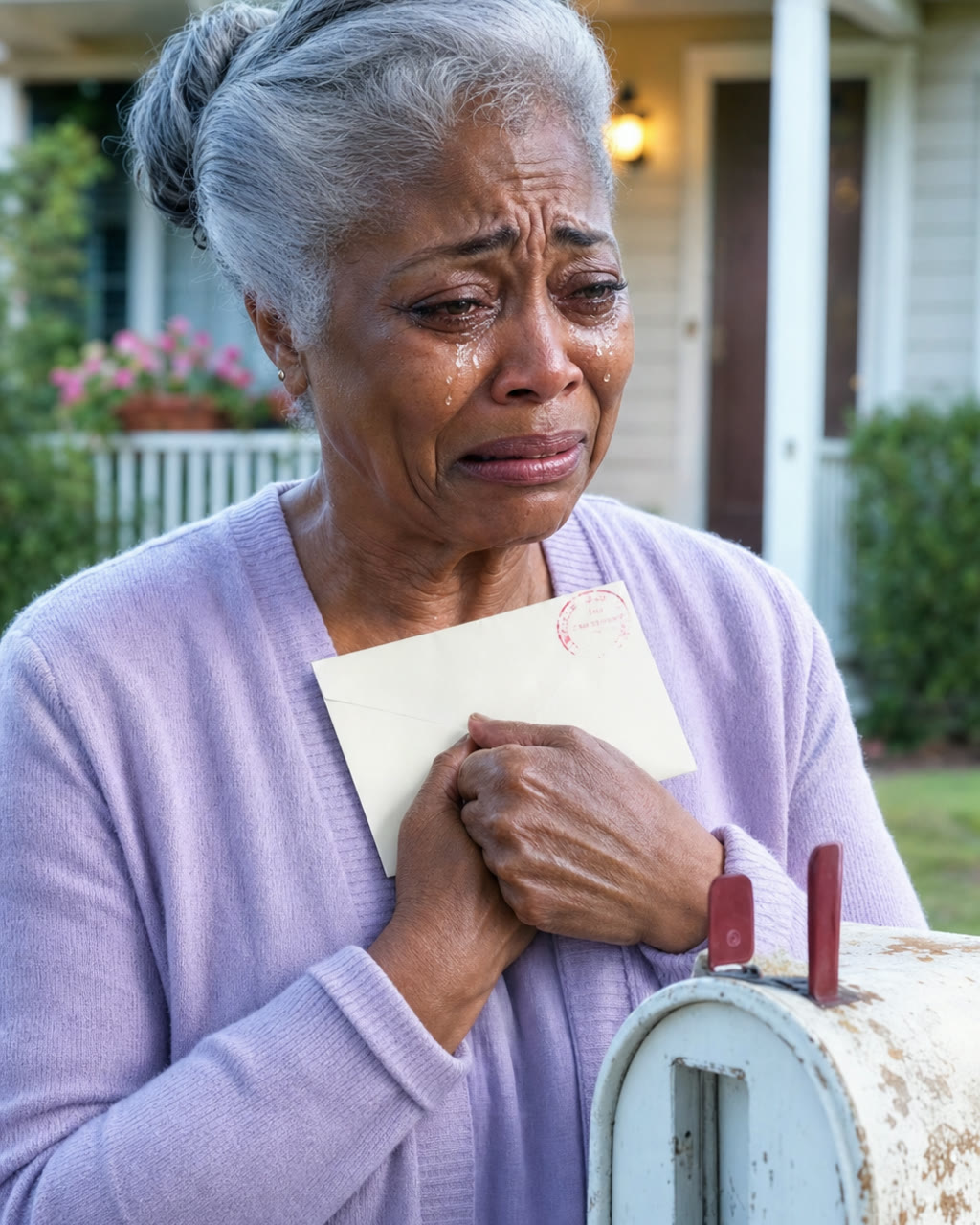
I still have the last envelope he ever sent back. It came home stamped "RETURN TO SENDER" in red, and my name was crossed out in handwriting that wasn't his. For twelve years I mailed my son money on the first of every month, and for twelve years he never called to say he got it. I am sixty-eight now, and my hands shake when I lick a stamp, but I never once missed a month.
Chapter 1
I mailed the first envelope on a Tuesday in September, twelve years ago.
I remember because I bought the stamps at the post office on Delmore Street, and the man behind the counter had a Band-Aid on his thumb. Funny, the things a mind holds onto. I can't tell you what I cooked for dinner last night, but I can see that Band-Aid clear as day.
Marcus had left for Atlanta that spring. He was twenty-two, angry at me, angry at his father's empty chair, angry at the whole street we grew up on.
We'd had words the night before he drove off. Bad words. The kind you'd give anything to swallow back down your own throat.
I told him he was throwing his life away chasing music. He told me I never once believed in a single thing he tried to build. Neither of us was all the way wrong, and that's what made it hurt.
So when he left, I did the only thing I knew how to do. I sent money.
Two hundred dollars, cash, folded inside a card, the first of every month. I never wrote much. Just "Love, Mama" and sometimes a Bible verse if the Spirit moved me.
The first few months, the mailbox stayed empty of any reply. I told myself he was busy. Atlanta is a big city, and a young man has his pride.
By the sixth month, my sister Delphine started in on me. She lives two doors down, and she has never in her life kept an opinion to herself.
"You still sending that boy money?" she said, standing in my kitchen with her arms crossed.
"He's my son, Del."
"He's a grown man who can't pick up a phone." She set her coffee down hard. "You're on a fixed income, Ophelia. That's your medicine money."
I didn't answer her. I just kept drying the same plate until she left.
The truth is, the money wasn't really money. It was a rope. As long as I kept throwing it out into the dark, there was still a line between us. If I stopped, I'd be admitting the line was already cut.
Delphine has a good heart under all that noise. Her weakness is she thinks love is something you can budget. Her strength is she showed up every single week for twelve years to argue with me, and a woman who shows up to argue is a woman who cares.
My husband Ray had passed two years before Marcus left. Heart gave out in the garage with a socket wrench still in his hand. So it was just me and the mailbox after that.
Ray and Marcus butted heads something awful when Marcus was coming up. Two hard heads, both of them, both convinced they were right about everything under the sun. But Ray loved that boy in the quiet way some men do, where they can't say it so they fix your bicycle instead.
The night Ray died, Marcus was nineteen. He didn't cry at the funeral. He stood at the back in a suit that didn't fit him yet and stared straight ahead. It wasn't until three days later I heard him in the garage at two in the morning, sitting on the floor by the workbench, just crying into Ray's old work shirt that still smelled like him.
I didn't go to him. I've regretted that for thirteen years. I stood in the doorway to the kitchen and I let him grieve alone because I thought that's what a man wanted. I was wrong about that too. Turns out I was wrong about a lot of what my son wanted.
I got a rhythm to it. First of the month, I'd walk down the driveway in my house slippers, put the envelope up, and lift the little red flag.
Then I'd wait for the mail lady, Miss Renata, to come by and take it. Some days I'd wave. Some days I'd pretend I was watering the ferns so she wouldn't see me watching.
Renata drove that route for years. She was a heavyset woman with a laugh you could hear from inside the house, and she knew everybody's business without ever being ugly about it.
One morning — this was maybe year three — she stopped her truck and rolled the window down.
"Miss Ophelia," she said, "your boy doing all right up there in Atlanta?"
"Oh, he's fine," I said. "Busy. You know how they are."
She looked at me a second too long. "Mm-hm," she said, and drove on.
I should have caught it then. That look. But hope makes you deaf and blind to the exact things you most need to hear.
The checks I mailed always cleared. I need you to understand that part, because it's the piece that kept me going. Every month the two hundred dollars came out of my account.
Somebody was cashing them. Somebody on the other end was taking that money out into the world. And a mother tells herself: if he's cashing it, he's alive. If he's alive, he'll come home.
I built my whole faith on a bank statement.
The cards were another thing. I never sent plain cash after the first year. I'd buy a card — birthday, or "thinking of you," or just a blank one with flowers — and I'd tuck the money inside so it didn't feel like charity. So it felt like a mother reaching for her child.
I kept copies of what I wrote in a spiral notebook. I don't know why. Maybe so that one day I could show him: see, I never stopped. Not one month.
Year five, I got sick. Pneumonia, both lungs, spent nine days in Mercy General.
Delphine sat with me every one of those days. And on the fourth day, feverish and half out of my head, I made her promise me something.
"If I go," I told her, "you mail his money. First of the month. Don't you let it lapse."
She started to argue. I grabbed her wrist with what little strength I had.
"Promise me, Del."
She promised. She's never broken it, either, the months I couldn't get to the box myself.
I got better. I came home. And the first thing I did, before I even unpacked my hospital bag, was walk down to that mailbox to see if maybe — just maybe — while I was sick, he'd sent something.
The box was empty except for a light bill and a flyer for a roofing company.
I stood out there in the cold in my robe until Delphine came and got me. She didn't say a word. She just put her coat around my shoulders and walked me back inside.
That was the closest I ever came to stopping.
But I didn't stop. First of the next month, the envelope went up, and I lifted that little red flag with a hand that wasn't as steady as it used to be.
The years have a way of folding into each other when you're waiting on somebody. Christmas after Christmas. I'd set two places out of habit and eat both plates myself over three days so nothing went to waste.
My grandbaby — well. That's a piece of this I didn't have yet, back then. That came later, and it came sideways, the way the worst and best things always seem to.
The neighborhood changed around me. The Hendersons sold their house. A young couple moved in across the street with a dog that barked at my ferns. Renata retired, and a new mail carrier took over, a quiet young man named DeShawn who never stopped to talk.
And still, every first of the month, I walked down that driveway.
People at Greater Zion — that's my church — they were kind about it for a while. Then kind turned to careful. Then careful turned to that soft, pitying quiet folks use around a woman they think has lost her grip.
Sister Pauline pulled me aside one Sunday after service, took both my hands in hers, and said the thing everybody was thinking.
"Ophelia, baby. Have you considered that maybe the Lord is telling you to let him rest in your heart?"
She meant Marcus was dead. She just couldn't put that word on me in the fellowship hall.
I pulled my hands back gentle as I could. "He's cashing the checks, Pauline," I said. "Dead men don't cash checks."
She nodded like she felt sorry for me. And I drove home and mailed the next one early, just to spite the whole world.
Twelve years. One hundred and forty-four envelopes, give or take the ones Delphine sent for me. A whole daughter-in-law I never met, a whole life happening somewhere I couldn't see.
I was so sure I was keeping a rope tied to my living son.
I had no earthly idea that for most of those years, on the other end of that rope, somebody was pulling back — and it wasn't Marcus at all.
I found that out on a Thursday. There was a knock at my door around suppertime, and when I opened it, a young woman I had never seen in my life was standing on my porch in the last of the daylight.
She was holding a shoebox against her chest the exact same way I hold that returned envelope. Like it might break. Like it might break her.
"Miss Ophelia?" she said. Her voice was shaking. "My name is Simone. I think — I think you're the reason I finally know who I am."
And she held the shoebox out toward me with both hands.
Chapter 2
I did not invite her in right away.
You have to understand — I'm an old woman who lives alone, and I've watched enough news to know better than to open my door wide to a stranger. But there was something in the way she said my name. Like she'd been practicing it.
"How do you know me?" I asked, keeping the storm door between us.
She looked down at the shoebox, then back up. "Marcus Whitfield is your son," she said. Not a question.
I hadn't heard anybody say his full name out loud in years. It went through me like cold water.
"Where is he?" I said. "Do you know where my son is?"
Her mouth opened, then closed. She pressed her lips together the way a person does when they're trying not to cry in front of somebody they just met.
"Can I come in?" she said. "Please. I drove up from Atlanta. Six hours. I've got so much to tell you, and I don't — I don't know how to do it standing on a porch."
Atlanta. That word did it. I unlatched the storm door.
She stepped in and stood in my front room like she didn't trust the floor. She was young, maybe thirty, with her hair pulled back and a nervous way of holding her own elbows.
I put on coffee because that's what my mother taught me to do with grief and strangers both. My hands stayed busy while my mind ran wild.
I got the good cups down. I don't know why. A stranger on my couch and I'm reaching for the good cups like it's Sunday company. I think some part of me already knew this was the most important conversation of my whole life, and you use the good cups for that.
She sat on the edge of my couch, the shoebox on her knees, and she looked around at my walls. There's a picture of Marcus at his high school graduation right there over the TV. Cap crooked, grin wide, seventeen years old.
She looked at that picture for a long time.
"He kept a photo just like that," she said quietly. "Same day, I think. Different angle."
"He kept it where?"
"In his room. At the house on Ashby Street." She swallowed. "The group home."
I set the coffee down in front of her, and I sat in Ray's old chair, and I said, "Baby, you're going to have to start at the beginning, because I don't understand one word you're saying."
So she did.
Simone told me she worked as a case manager. Ashby Street, she said, was a residential care facility on the south side of Atlanta. Long-term. For adults who couldn't fully live on their own.
She talked with her hands when she got nervous, I noticed. Little movements, like she was smoothing an invisible tablecloth. She had a chip in her front tooth she'd touch with her tongue when she paused.
"How long have you done this work?" I asked her. I don't know why. I think I needed to slow the moment down before it got where it was going.
"Six years total. Three months at Ashby." She looked down at the box. "I almost didn't take the Ashby job. It's the hardest kind. People come in and they don't leave, mostly. You get attached and then—" She didn't finish.
"Marcus has lived there for eleven years," she said.
Eleven years. He'd left home twelve years ago. My mind did the terrible arithmetic before she could go on.
"There was an accident," Simone said. "About a year after he came to Atlanta. He was driving home from a gig — he played bass, you know, at this little club off Edgewood—"
"I know he played bass," I said. My voice came out harder than I meant. "I bought him his first one."
That bass was the whole reason we fought the night he left. Two hundred dollars I'd saved for it when he was fifteen, and then seven years later I stood in this very kitchen and told him music was a foolish thing to build a life on.
You want to know the cruelest joke God ever played on me? For twelve years after that fight, I sent that boy two hundred dollars a month. The exact price of the bass. I never once made that connection until I was sitting there telling this stranger about it. I'd been paying for that bass over and over, one month at a time, like I could buy back the thing I said.
She nodded quick. "A truck ran a light. Hit the driver's side."
I gripped the arms of Ray's chair. The same chair Ray was sitting in the night before his heart stopped. I don't know why that came to me right then, but it did.
"He didn't die," Simone said gently, seeing my face. "But he had a brain injury. A bad one. He was in a coma for two months, and when he woke up, he couldn't — he wasn't the same, Miss Ophelia."
I could not make a sound.
"He can't speak the way he used to," she said. "He understands more than he can say. His memory comes and goes. Some days he knows exactly who he is. Some days he's twenty-two and thinks he just moved to the city."
I kept thinking about all the ordinary things. Whether anybody had cut his hair the way he liked it. Whether anybody knew he wouldn't eat okra unless it was fried crisp. Whether anybody had held his hand when he woke up scared in a body that didn't work right anymore.
Whether, in two months of a coma, one single person had thought to play him bass music.
"You said a coma for two months," I said slowly. "He was unconscious two months, and nobody called me. I'm his mother. I have been his emergency contact his whole entire life."
Simone got quiet in a way that told me the worst part was still coming.
The coffee sat there going cold between us. I looked at that graduation picture over the television, at my boy with his crooked cap.
"Eleven years," I finally said. "He's been eleven years in a home in Atlanta and nobody. Called. Me."
Simone's face crumpled then, just for a second, before she got it back under control.
"That's the part I came to tell you," she said. "That's the part that's — Miss Ophelia, when I found out, I couldn't sleep. I've been sick over it for a week."
She wrapped both hands around her coffee cup like she was cold, though it was warm in my house.
"When I took over his file three months ago," she said, "I saw the deposits. Somebody named Ophelia Whitfield, two hundred dollars, first of every month, going back years. And I asked around. And everybody told me the same thing — that was a cousin's arrangement, the family didn't want contact, leave it be."
"The family didn't want contact," I repeated. The words tasted like pennies.
"That's what the file said. That's what I was told." Her jaw tightened. "But something didn't sit right. Because whoever this Ophelia was, she never missed. Not one month in years. And people who don't want contact — Miss Ophelia, they miss. They forget. They get tired. This woman never got tired. So I started pulling threads I probably wasn't supposed to pull."
She opened the shoebox.
Inside, there were envelopes. My envelopes. The flowered cards, the "thinking of you" cards, my handwriting on every one. Some opened, some never opened at all.
I reached in and touched them. My own handwriting from years ago, when it was still steady. I could tell the old ones from the new ones just by how neat the letters were. You could read my whole aging in that shoebox. The lines getting shakier, the "Love, Mama" getting harder to make out.
There was one on top from a Christmas I remembered — I'd drawn a little holly leaf next to his name because my pen had a green side. I'd forgotten I ever did that. Seeing it there, in a stranger's shoebox, six hours from home, undid something in me.
"These are mine," I said stupidly. "These are the ones I sent."
"Some of them," Simone said. "The ones he got. There were a lot more that he never—" She stopped herself. "We'll get to that."
And underneath them, a phone. An old flip phone, cracked down the front.
"When Marcus came to us," Simone said, "he came with a next-of-kin on file. A cousin. The person who was supposed to be his contact. The person who handled his mail, his money, his benefits." She looked at me. "Your checks came to that person. Not to Marcus. To his cousin."
The room tilted a little. "Which cousin," I said.
"His name is on the intake papers." She pulled a folded sheet from the box and held it, not letting go of it yet. "Miss Ophelia, did Marcus have a cousin named Terrence?"
The cup slipped in my hand. I set it down before it could fall.
Terrence. Ray's sister's boy. Charming, quick, always in some kind of hustle, always with a reason he needed a little help.
I want to tell you I always saw something bad in him, but I'd be lying. That's the part that shames me. I liked Terrence. Everybody liked Terrence. He remembered your birthday, he carried groceries for old ladies, he had a smile that made you want to hand him things.
His strength was that smile and the memory that came with it. His weakness was that he'd learned early those gifts were easier to spend than to earn. The memorable thing about him, the thing I keep coming back to, is that he wore Ray's watch to Ray's own funeral — asked me for it after, "to remember him by," and I gave it, and I thought it was sweet.
He'd gone to Atlanta the same year Marcus did. Said he'd "look out for him." I'd been so grateful. I'd cried on Terrence's shoulder at the bus station, told him thank you, thank you, keep my baby safe.
"He was the one who called me," I whispered. "Years ago. Terrence called and said Marcus was fine, just needed space. Said Marcus was still angry at me. Said don't call, let him come to you when he's ready. Said pushing would only drive him further."
I remember writing that down in my notebook, even. "Don't call. Let him come." Like it was doctor's orders. Like it was wisdom instead of a cage.
Simone closed her eyes.
"He told me my son didn't want to hear from me," I said. The words came out slow, like I was learning them for the first time. "He told me that. And I believed it, because it fit. Because Marcus left angry. It fit the story I already had in my head."
"Miss Ophelia—"
"Twelve years I thought my son was rejecting me." My hands had started to shake, and not from age. "And the whole time he was lying in a bed six hours away, and the mailman was bringing my letters straight to the one man who—"
I couldn't finish it.
Simone reached into the shoebox and took out the cracked flip phone. She turned it over in her hands.
"There's something you need to see," she said. "It's why I finally found you. It's the reason I'm sitting in your living room right now." She pressed a button, and the little screen lit up dim and blue in my darkening front room. "But I have to warn you. Once you see this, you can't un-see it. And it's going to break your heart in a way I can't fix."
She held the phone out toward me across the coffee table.
My hand hung in the air over it, and for the first time in twelve years, I was afraid to reach into the mail.
Chapter 3
I took the phone.
The screen was small and the photo on it was dim, but I could see it. A bulletin board. The kind they hang in a break room or a hallway.
Pinned to that board were cards. My cards. The flowered ones, the blank ones with the little birds on them. Somebody had pinned them up in a row.
"That's the wall in the staff room at Ashby Street," Simone said. "The staff put those up. So he could see them from the doorway when he passed by. Turn the page. Swipe."
I fumbled with it — I don't know these little phones — and she leaned over and did it for me.
The next picture was Marcus.
I had not seen my son's face in twelve years. My breath left me all at once, like a hand pressed flat on my chest.
He was older. Heavier in the face. There was a scar that came down through one eyebrow, pale against his skin. He was sitting in a chair by a window with the morning light coming in gold behind him, and he was holding one of my cards in both hands, looking down at it like it was the last page of a book he'd been reading his whole life.
He wasn't smiling. He wasn't crying. He was just looking at it, the way you look at something you're trying very hard to understand.
I know that face. I put that face on him. When Marcus was five, I taught him to read at that kitchen table, and when a word got too hard he'd get that exact same look — chin down, brow pulled tight, so determined not to give up.
Fifty-something years old now in that picture, in that chair, and my baby was still refusing to give up on a word.
"He can't read the way he used to," Simone said, very softly. "But he holds them. Every one that made it to him, he holds. The staff started saving them because — because of what happened when they didn't."
"What happened when they didn't," I said.
She was quiet a moment. "When there was a stretch with no card, he'd get agitated. Wouldn't eat. He'd go to the front window and wait. One of the old aides, Miss Carol, she figured out he was waiting on the mail." Simone's voice caught. "He didn't have the words to ask. He just waited by the window."
I put my hand over my mouth.
"There's a thing he does," Simone went on, careful, "when a card comes. Miss Carol told me. He holds it to his chest first. Before he even opens it. He holds it here—" she pressed her own hand flat over her heart "—for a minute. Then he opens it."
I know why he did that. Because that's what I do. That's what I did with every letter that came back to me stamped RETURN TO SENDER. You hold it to your chest first, because the holding is the part where they're still with you, before you have to find out they're not.
My son learned that from me. He couldn't remember his own address some days, but his body remembered how his mother held the mail.
I put my hand over my mouth again and I couldn't take it away this time.
"But that's just it," I said, when I could talk. "I sent them. Every month. If he was waiting on cards, why were there stretches with none? I never missed—"
My voice broke on the word. Twelve years I'd hung my whole self on never missing. It was the one thing I'd done right. It was the one thing I had.
Simone nodded slowly, like she'd been dreading exactly this question.
"Because they didn't all get to him," she said. "Terrence was the mail contact. Everything came to him first. The money, the cards, all of it. He'd bring a card by every now and then to keep it looking right. But the checks—" She stopped. "The checks he kept."
I sat back in Ray's chair.
Twelve years. Two hundred a month. I did the number and then I made myself stop doing the number, because the number was going to make me say something in my own front room that a churchgoing woman shouldn't say.
"He stole my son's mother from him," I said instead. "That's what he did. He didn't steal money. He stole me. He stood between my baby and me and he took the both of us."
I thought about the day at the bus station. Terrence in a fresh haircut, telling me he'd watch over Marcus, telling me not to worry. I'd pressed forty dollars into his hand for gas and thanked him with my whole heart. I'd thanked the man who was about to sell my son's silence back to me two hundred dollars at a time.
"He called me twice," I said. "In twelve years. Both times to tell me Marcus needed space. I sent him a Christmas card every year, Simone. To Terrence. Thanking him for looking after my boy."
Simone put her hand over her mouth.
"There's a coldness in that," I said, "that I cannot get my mind around. It's one thing to steal from an old woman. It's another to take her thank-you card while you do it."
"Miss Ophelia." Simone leaned forward. "There's more, and I need you to hear all of it, because some of it — some of it is good. I promise you some of it is good."
I looked at her. This stranger who'd driven six hours with a shoebox. I noticed for the first time how tired she looked. How her hands hadn't stopped moving the whole time.
"Why do you care?" I asked her. It wasn't unkind. I just needed to know. "You're his case worker. You've got a hundred people to look after. Why'd you drive all night for mine?"
She was quiet for a long time.
"Because I aged out of foster care with nobody," she finally said. "Nobody drove six hours for me, not once, my whole life. And then I came onto this job three months ago, and I inherited Marcus's file, and I found a wall full of birthday cards from a mother who never once stopped." Her eyes were wet now and she let them be. "And I thought — somebody is fighting for this man and doesn't even know it's not reaching him. Somebody out there is still trying."
She wiped her face with the back of her wrist.
"I couldn't let it be one more file where the person who loved you couldn't get through," she said. "I just couldn't."
I looked at this young woman on my son's behalf, and I thought about all the children the world lets fall through its own cracks. Simone had been one of them. And instead of letting it make her hard, she'd made it into a job where she stood in the crack herself and caught whoever came through next.
"Who raised you?" I asked her. Gentle.
"Nobody, really," she said. "Group homes. Some good, some not. I timed out at eighteen with a garbage bag of clothes and a bus pass." She gave a small, tired laugh. "That's why I keep coming back to this work even though it's eating me alive. I know exactly what it feels like to be a file nobody drives six hours for."
"Well," I said. My voice wasn't steady. "You drove six hours for mine. So don't you tell me nobody would drive for you. I would. Starting right now."
She had to look out the window for a minute after I said that. I let her.
Simone's weakness, I'd learn, was that she took every case home in her chest and it was slowly wearing her down. Her strength was that she'd walk through a wall for a person she'd known three months. The memorable thing about her was that she still carried her own childhood teddy bear in her car — I saw it later, buckled into the passenger seat like a person.
"How did you find Terrence out?" I asked.
"The checks stopped clearing on his end about six weeks ago," she said. "He moved, or something changed. The facility flagged the account. When I went digging to fix Marcus's benefits, I found the whole trail. Twelve years of deposits from an Ophelia Whitfield. And I thought — she has to be real. She has to be out there. Nobody keeps that up for a ghost."
"How'd you find my address?"
"Your name was on a card that came in. A newer one." She almost smiled. "You'd written your return address on the back flap. Terrence must not have caught that one. It slipped through. Your handwriting is small but it's clear." She reached into the box and pulled it out — a plain card, my own address in my own hand. "This little envelope is the whole reason I'm here. If you hadn't written your address on it, I'd never have found you. You'd have gone your whole life not knowing."
I took it and held it. Such a small thing. A habit my mother drilled into me sixty years ago — always put your return address, in case it comes back. I'd done it out of pure reflex, ten thousand times, never thinking.
And that reflex was the thread that led a stranger to my door.
"My mama used to say the return address is the part that says you'll always take it back," I told Simone. "No matter how far it goes. It's got a place to come home to." I had to stop. "I didn't know I was leaving him a way home the whole time."
"Delphine called me a fool for feeding a ghost," I said, half to myself.
"You were feeding your son," Simone said fiercely. "The ghost was the lie somebody told you. Not Marcus. Never Marcus."
I held that cracked phone with my boy's face on it, and I looked at him holding my card by that bright window, and something in me that had been clenched tight for twelve years started to come loose. It hurt worse than the clenching had.
"I want to see him," I said. "I want to go to Atlanta. Tomorrow. Tonight. Now."
Simone's face changed. Just slightly. But I've raised a child and buried a husband, and I know the exact shape a face makes right before it has to tell you something you don't want.
"That's the last thing in the box," she said.
She reached in and took out a single folded paper. Not intake papers this time. A letter, on lined notebook paper, the handwriting big and shaky and slow, like a man relearning how to hold a pen.
"He can't write much," Simone said. "It took him three weeks. Miss Carol helped him with the hard words. He made her promise not to read it out loud." She held it out to me. "He wrote it before I ever found you. He wrote it to a mother he wasn't sure was still alive. And Miss Ophelia — there's a reason he had to write it now. There's a reason it couldn't wait."
I took the letter. My name was on the front. Not crossed out this time. Just my name, in my son's shaking hand: MAMA.
"Read it in the morning," Simone said, standing suddenly, gathering herself. "Please. Not tonight. Let me be here when you—"
But I was already unfolding it. A mother waits twelve years, she doesn't wait one more night.
I got as far as the first line before my hands wouldn't hold it steady anymore.
The first line said: "Mama if you get this I am sorry I did not fight harder to get to you."
And the second line was the one that made me have to set the paper down on Ray's armrest and press both hands flat against my knees so I wouldn't come apart right there.
Chapter 4
The second line said: "The doctors say I do not have long now so I wanted you to hear it from me and not a paper."
I sat very still.
Simone came and knelt down in front of Ray's chair. She put her hand over mine. Hers was warm. Mine was cold.
"His heart," she said quietly. "The injury did damage that's been catching up with him for years. About two months ago, the doctors gave us a window. That's the real reason I couldn't wait, Miss Ophelia. That's why I got in the car."
I looked at her. "How long."
"Weeks," she said. "Maybe a couple months. Nobody can say for sure."
I want to tell you I fell apart. I didn't. Something else happened, something I didn't expect. A great calm came down over me, the kind I imagine soldiers feel when the waiting is finally over and there's just the thing itself to do.
I stood up out of Ray's chair.
"Then we're not sitting here," I said. "Go start your car."
We drove through the night. Simone drove the first stretch and I drove the second when her eyes got heavy, an old woman doing seventy on I-85 with a teddy bear buckled in the back seat and a shoebox of returned love on my lap.
I called Delphine from the road. Woke her up. I told her everything in a rush, my words tripping over each other, and there was a long silence on her end.
"I called that boy a ghost," she said finally. Her voice was thick. "Ophelia. I called him a ghost to your face."
"You didn't know, Del."
"I told you to stop sending it." She was crying now, my hard-headed sister who never cries. "All those years I told you to stop. And you didn't listen to me. Thank God in heaven you never once listened to me."
"Go back to sleep, Del," I said, soft. "Meet me when I bring him home."
I finished reading the letter under a gas station light somewhere past Greenville.
He wrote about the accident. He wrote that in the early days, when he could still think clear enough, he'd asked Terrence to call me. Over and over. And Terrence would say he did, say I was angry still, say I didn't want to come.
Marcus believed it. That's the part that took the wind clean out of me. My son, lying in that bed, believed his mother had heard he was hurt and chosen not to come.
"I thought you were still mad about the music," he wrote. "I thought I broke it too bad to fix. Every card I thought was you being nice at holidays. I did not know you were sending your whole self."
Terrence had shown him just enough. A card here, a card there, always with some story about how I "still wasn't ready to talk." Enough to keep Marcus from pushing. Enough to keep me from knowing. A man can build a whole prison out of small lies, and charge rent on both sides of the wall.
I read the last line of that letter maybe forty times at that gas station.
"If you are alive Mama please do not be sad you missed it. You did not miss it. I felt you every month. I did not always have the word for it but I felt somebody out there would not let go of me. That was you. I know that now. That was you the whole time."
Somewhere past that gas station, in the dark, I finally cried. Not the pretty kind. The kind that comes up out of a place you forgot you had. Simone reached over without a word and held my hand and drove us both toward Atlanta with her tired eyes on the road.
We got to Ashby Street a little after seven in the morning.
It was an ordinary house on an ordinary street, brick, with a wheelchair ramp and a flower bed somebody kept up nice. The morning light was coming down gold and clean through the trees. I don't know what I'd expected. Something sadder, maybe. It was just a house. A house where my son had lived for eleven years.
Miss Carol met us at the door. She was an older woman, my age about, with reading glasses on a chain and flour on her hands from the kitchen. She took one look at me and her whole face opened up.
"Lord have mercy," she said. "You've got his eyes." She was already crying, and she wasn't even the mother. "He's up. He had a good night. He's a good-morning kind, most days."
She took my hand and walked me down a short hallway. There was a bulletin board on the wall, and pinned to it were my cards, the flowered ones, the little birds, all in a row, just like the photo.
Miss Carol saw me looking. "We couldn't let him lose them," she said simply. "So we kept them where he could always find them."
"You've been good to him," I said. It came out more like a question than I meant.
She stopped in the hall and looked at me straight. "Miss Ophelia, that man taught himself to hum again by ear. Couldn't hardly talk, but he'd sit by that window and hum bass lines all afternoon. We loved him. I want you to know that going in. Whatever you missed — he was not unloved here. He was our favorite, and we're not supposed to have favorites."
I had to hold the wall for a second. Somebody had loved my son when I couldn't get to him. In all the grief of that hallway, that was the first thing that felt like water in a desert.
Miss Carol's weakness was that she'd taken early retirement twice and come back both times because she couldn't stand to leave her people. Her strength was those same people. The memorable thing about her was the flour — she baked for the residents on her own dime, every single morning, because she said a house that smells like biscuits doesn't feel like an institution.
Then she opened a door.
Marcus was sitting in a chair by the window, in the light, the way he was in the picture. Older, heavier, the scar through his brow. A blanket over his knees. He was holding one of my cards.
He looked up.
For a second his face did nothing, and my whole heart hung off the edge of that second. The doctors had said his memory came and went. I did not know which day this was. I did not know if my own son would know my face.
Then his eyes filled up, slow, and his mouth worked, and he got out one word. Just one, thick and slow and the most beautiful sound I have heard in my life.
"Mama."
I crossed that room and I got down on my knees in front of his chair, an old woman's knees, and I put my arms around my baby, and he put the card down and held onto the back of my dress with both hands the way he did when he was three years old and the thunder scared him.
We didn't say much. There wasn't much that needed saying. He held my dress and I held his head against my shoulder and I rocked him a little, and out the bright window the morning just kept coming up gold over Ashby Street like it didn't know anything had ever been wrong.
I stayed in Atlanta.
I got a little room ten minutes from the home and I was there every single morning when he woke. Some days he knew me clear as a bell. Some days he thought I was his teacher, or he was twenty-two and asked when his gig was. On those days I just held his hand and let him tell me about the club off Edgewood and the songs he was going to write.
I stopped correcting him. Early on I'd say, "Baby, it's Mama, it's twelve years later." And I'd watch it hurt him, watch him try to fit the pieces and fail, watch that determined little five-year-old face come up trying to solve a problem too big for him. So I quit doing it.
If he was twenty-two that morning, then I was a friend from the club, and I'd ask him to tell me about the music. If he knew me, I was his mama, and I'd let him rest his head on me. Whoever he needed me to be that day, I was that. It took me sixty-eight years and a shoebox to learn that love isn't about being right. It's about being there in whatever room they're actually in.
Delphine drove down on weekends. The first time she saw him, she walked in loud like she does, and then she got one look at his face and all that noise went right out of her. She sat down next to him and took his hand and said, "Hey there, nephew. Your auntie owes you the biggest apology in Georgia." He didn't understand the words. But he smiled at her tone. Del cried the whole six hours home.
I brought his old bass down from my attic. Delphine drove it to me. It had sat in a case in my crawlspace for twelve years because I couldn't look at it and couldn't throw it out.
I couldn't play a note, but I'd set it in his lap, and his hands remembered what his mouth couldn't. Slow, clumsy, one string at a time. But he'd close his eyes and find a line and hold it, and Miss Carol would stop in the doorway with her flour hands and just listen.
One morning he played something soft and turned to me and got out three words. "For Daddy," he said. And I understood he meant Ray, and that somewhere in that broken memory my husband and my son had finally made their peace, in a place I couldn't follow.
I told him his father was proud of him. I don't know if it was true when Ray was living. But I know it was true right then, wherever Ray was, listening.
I got to be his mother again for seven weeks and four days.
He went in his sleep, in the early morning, with my hand in his and the porch-colored light just starting through the window. Miss Carol was there. Simone was there. He wasn't waiting by any window this time. He wasn't waiting for anything at all.
Terrence, I'll tell you plainly, is a matter for the law now, and I've left it in their hands and in God's, because I don't have room in me to carry hate and grief both, and I chose which one to keep.
I brought Marcus home to bury him next to his father. Delphine met the car in the driveway. She didn't say one word about ghosts. She just held me up on the walk to the porch, the way she'd held my coat around me all those years ago at that empty mailbox.
Simone came to the funeral. She sat with the family, because that's what she is now. She's mine now too. A woman drove six hours with a shoebox and a teddy bear and gave me back my son for fifty-three days, and you don't ever let go of somebody who does a thing like that.
I still have the mailbox at the end of my driveway. I don't send anything from it anymore. But most mornings I still walk down there in my slippers, and I lift that little red flag up, and I stand a minute in the light.
Because for twelve years I thought I was throwing a rope out into the dark to a son who'd let it go. And it turned out he was holding on the whole time, on the other end, in a room full of my flowered cards, waiting by a window for a woman he thought had forgotten him — and neither one of us ever let go, not once, not even when the whole world swore the line was already cut.
You may also like
The Silent Truth Behind My Daughter's Accident
The call came at 11:47 at night.…
Read the full story →The Night Evelyn Harper Took Back Her Power
My husband's mistress openly mocked me while my husband smiled… While they laughed at my pain, they never realized that I was the one in control. The moment I whispered, "Everythin…
Read the full story →He Fired the "Cleaning Lady" in Front of the Whole Office — Nine Minutes Before the Board Handed Her the Company
My name is Eleanor Reyes, and for eighteen months the people at Meridian Textiles thought my name was "hey" or "the cleaning lady" or, on a good day, "Ellie, could you get the brea…
Read the full story →